
Can linseed oil be used as a painting medium?
Certainly! Painters have been modifying binders with linseed oil, gums, glues and beeswax for about 36,000 years in order to make their visual art works look right and stick together. Linseed oil has been used as the primary binder for artists’ paints since mid-15thC. Linseed oil varnishes were commonly added to thin paints, enhance dry time and even surface sheen.
Linseed is the oil seed of the flax plant. Among the first cultivated crops 10,000 years ago, flax plants were grown for fibers to make linen fabric, lamp oil and paint binders. One species of flax plants, Linum usitatissimum, has been continuously cultivated for both fiber and seed. Taller, willowy-stocked flax stems were harvested just after first flowering and processed into linen fiber. Sturdier, lower growing flax plants flower fully before their seeds were processed into linseed oil.
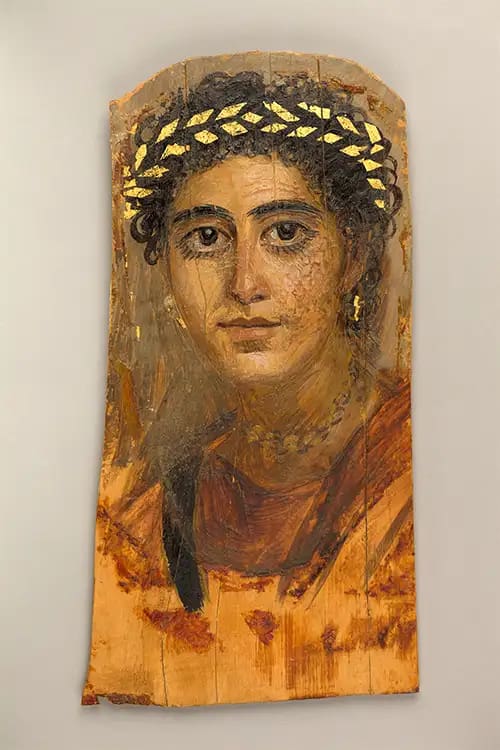
Portrait of a young woman in red
Roman Period, A.D. 90–120, © The Metropolitan Museum of Art
Linseed oil has the highest linoleic and alpha-linolenic (unsaturated omega-6 fatty acids) content among oil seeds. Due to its chemical composition, linseed oil was the only available vegetable oil that dried completely when exposed to air. During its oxidation process linseed oil had a strong odor and a short shelf life.
Its tendency to thicken and stink made other oils preferable for culinary and medicinal purposes. Its true value has always been its tendency to thicken.
When boiled with tree resins like frankincense and myrrh like, linseed oil makes an oil varnish so tough it made boats float.

Section of the Bayeux Tapestry
Common to all boat building cultures, the oil varnish technology may be older than Ethiopia, which still cultivates flax. “Linon” was Greek for flax. Ancient technology to extract pure oil from flax seeds was limited because producers could not separate flax seeds from weed seeds. Weed seed oil was a non-drying vegetable oil that slowed down the drying time of linseed oil. So for centuries painters and paint makers used chemical driers and modifiers to speed up drying.
Lighter oils make brighter colors
Finally mid-20thC, engineers invented the technology to separate flax seeds from weed seeds by shaking weighted screens until the slightly heavier oil rich flax seeds dropped down. Pure flax seed oil no longer required as much modification to speed drying. All linseed oil still has to be de-odorized. Otherwise cold pressed (CP) linseed oil is supposedly processed without chemical modifiers. Most CP linseed oil is packaged as food grade. Generally culinary customers don’t care about the color. For paint makers, linseed oil had to be further refined to make a lighter color as well as increase the yield. Lighter oils make brighter colors.
To sharpen their pictures and adjust colors, artisans also modified paints with oil varnish and wax to make thicker paints than white (lime) wash paints. Thicker paints were formulated to adhere on top of fresco paintings to make sharper lines.
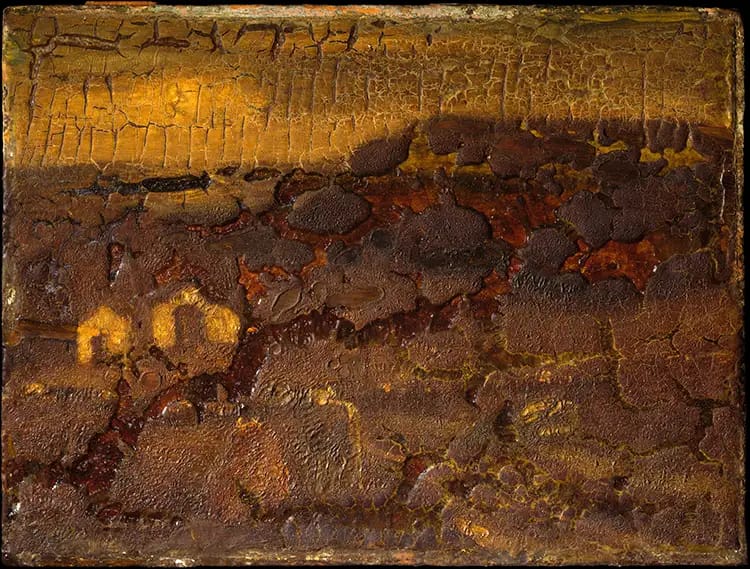
Using only linseed oil to thin colors makes oilier (fatter) paint layers. One among very few rules for painting in oils is to paint FAT (shiny) OVER LEAN (matte). The “fat over lean” rule is followed to make sure paint layers inside paintings dry before top layers.
Linseed oil “dries” by first absorbing oxygen, which causes the oil to polymerize and thicken into a firm film. If top paint layers are too oily, dried paint surfaces may wrinkle unpredictably. If the under layers are too oily, the finished painting is more likely to crack. To keep under layers leaner, painters can sand down the shine; add a dash of odorless mineral spirits (OMS), or paint thinly to keep the painting lean.
Oil/Resin varnish recipe
The most common additive in traditional oil painting was oil varnish, a simple mix:
- Add ¾ cup very finely crushed pine resin (not rosen) to 1cup refined linseed oil or CP (cold pressed) linseed oil, preferably from a reputable supplier.
- Agitate until resin completely dissolves.
Unless exploring Old Masters’ techniques and materials, beware cold pressed linseed oil’s dramatic tendency to yellow.
When resin is completely dissolved, varnishes are ready and may thicken over time. To see the difference, mix a varnish batch from refined oil + pine resin and one from CPLO + pine resin. Mix oil varnishes with titanium white paints and spread out on a test surface. Set the surface aside for a while in low light before deciding which one looks right. Sunshine will naturally bleach out most natural yellowing on traditional oil paintings stored in the dark for a while but not totally. Oil varnishes made with darker LO would traditionally have been reserved for mixing with darker colors.
Unless individuals are working with a compromised immune or respiratory system, consider using a small measure of solvent to thin paints in under layers. Contemporary paints are thicker than paints of the past so just dipping the brush in OMS before mixing colors is often enough to defat oil and thin paints. Consider a solvent more like a condiment than a component of a contemporary painting system. For contemporary painting process, odorless mineral spirits (OMS) has enough solvent power to defat oils and oil varnishes but not to dissolve dammar resin.
Solvent was not a key component of oil painting until the 18thC when gum turpentine was introduced into studios. 20thC mineral spirits solvent (petroleum distillates) was less toxic. But since 1970s painters have had access to a less toxic solvent and significantly better paints. Odorless mineral spirits (OMS) has enough solvent power to thin paints for glazes but not enough solvent power to dissolve dammar or copal resins. Unless painters want to shatter or crack open the paint film, OMS offers enough solvent power for most painting practices. Regardless of labeling, if a solvent smells, it is not OMS.
By changing the air in the room once a day, painters will have less solvent exposure than spending a half hour in a nail salon.
Here’s a selection of oil colors by fat content:
LOW OIL CONTENT:
Cadmium Orange
Cadmium Yellows
Cadmium Reds
Cerulean Blue
Cobalt Blue
Cobalt Green
Cobalt Violet
Indian Red
Manganese Violet
Mars Black
Prussian Blue
Raw Sienna
Venetian Red
Titanium Whites
MODERATE OIL CONTENT:
Burnt Sienna
Dioxazine Purple
Mars Orange
Napthol Reds
Permanent Green Light
Phthalo Blues
Phthalo Greens
Quinacridone Magenta & Reds
Raw Umber
Ultramarine Blue
Ultramarine Violet
Yellow Ochre
HIGH OIL CONTENT:
Alizarin Crimson
Burnt Umber
Hansa Yellows
Indian Yellow
Ivory Black
Perylene Reds
Viridian
Header image: Snow Storm – Steam Boat off a Harbour’s Mouth, by J. M. W. Turner