
A Brief History

Rhazes (c.860-930), Islamic Persian scholar, physician and alchemist, with an assistant, in his chemistry laboratory in Baghdad.
Solvents have been used in oil painting processes to defat (“bite”) an oil paint layer to increase adhesion between the layers since the 18thC when demand for monumental paintings increased in Europe. Solvents continue to be used to thin paints for easier spreading; to dissolve resins to make painting mediums; and for brush and studio clean up. Adding too much solvent breaks down the linseed oil binder and decreases adhesion.
Do you have to use industrial solvents in oil painting like the New York Abstract Expressionists painters did? No.
Solvent has always been a condiment if not a component of oil painting processes. Nature provides solvents. Humans refine them. Alcohol is a solvent which dissolves fatty acids, sugars and many vegetable alkaloids into solution.
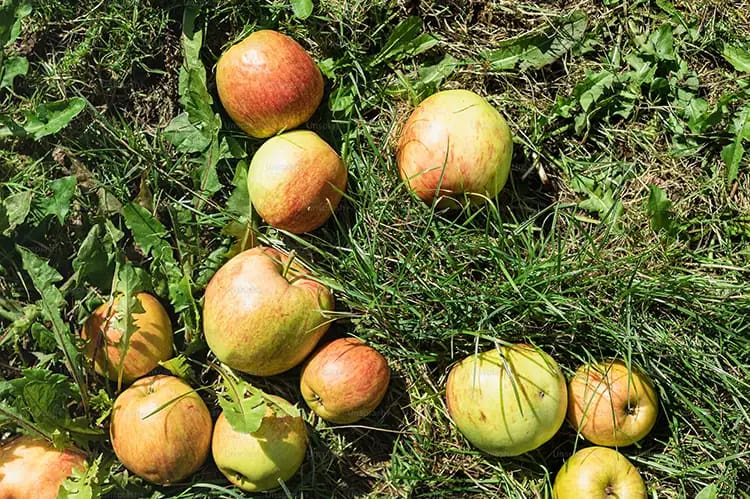
When an overripe apple is cut, a sharp smell of alcohol is released from the sweet. Alcohol is refined using a fermentation process during which grains, apples and grapes are cooked down to sugars and converted by yeasts into alcohol. Humans beings have controlled fermentation processes since the cave times. The evidence is in the residue from beer (prehistoric) and wine (approx. 8000 BCE) left behind in the bottom of cups unearthed by archeologists. Beer and wine are fermented drinks, not distilled.
Ancients probably distilled wine and beer for the same reasons we do – to use up stale wine and beer; to concentrate flavors and increase alcohol content. Distillation is basic steam collection. Wine, for example, is heated in a covered pot until ethyl alcohol evaporates (about 175 degrees F). After distillation, alcohol cools to a fluid at room temperature. There are three basic types of alcohol: isopropyl, methyl, and ethyl.
Ethyl alcohol is ethanol, the only type of alcohol which humans can consume without being harmed. “Sura” made in India about 5000 years ago is considered the first cocktail distilled from rice spirits. The Babylonians worshiped a wine goddess about 4700 years ago. The Greeks preferred mead; the Romans wine.
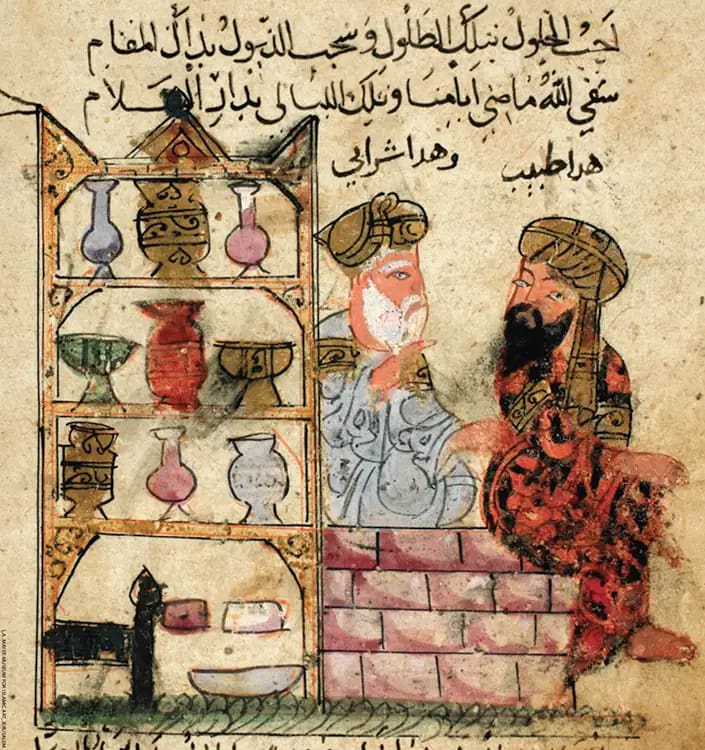
Detail from Ibn Butlan’s Risalat da’wat al-atibba.
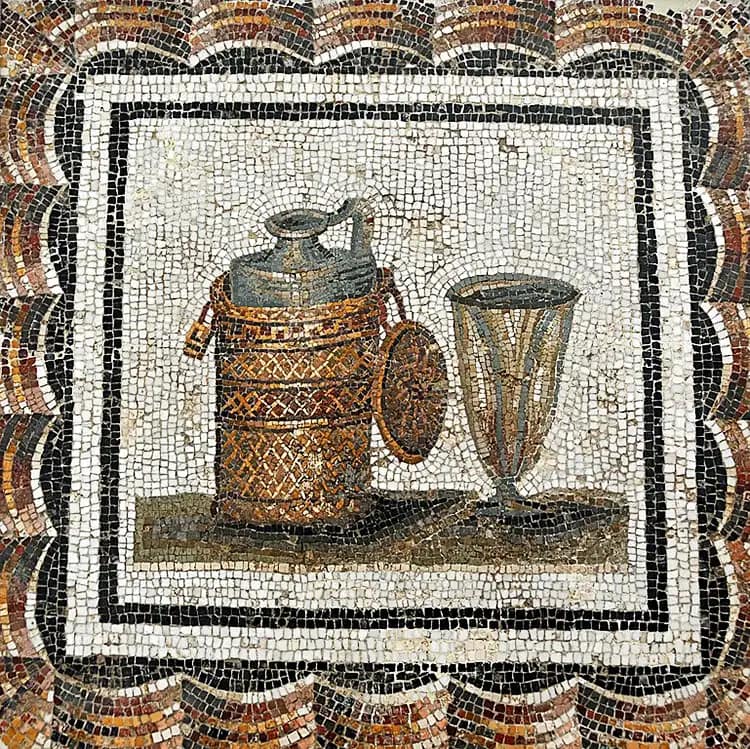
Vinegar is “poor man’s wine” – posca, often carried by Roman legionnaires into battle.
Stale wine, decomposing fruits and other sugars were fermented into vinegar by the natural action of acetic acid bacteria, which are airborne and ubiquitous in nature. In warm climates, vinegar was widely available and made a good cleanser.
Turpentine was distilled from pine tree resin through the ancient Mediterranean region. Oil of turpentine was an aseptic agent in the preparation of ointments, “spirits” (aromatics) and rosin. Due to its strong solvent (Kb value 56) spirits of turpentine was probably on the shelf of most art workshops, including book illustrators and binders but not commonly used. Its toxicity was common knowledge, as the relationship between working around turpentine and coughing and shortness of breath was recognized.
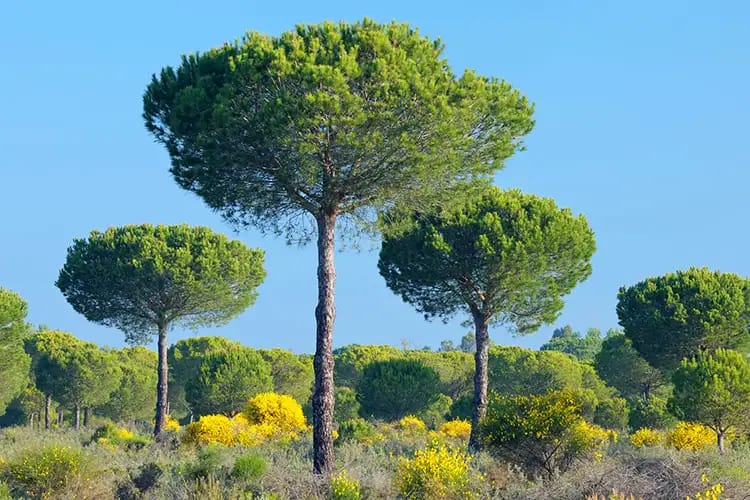
Pinus pinea, Italian Stone Pine
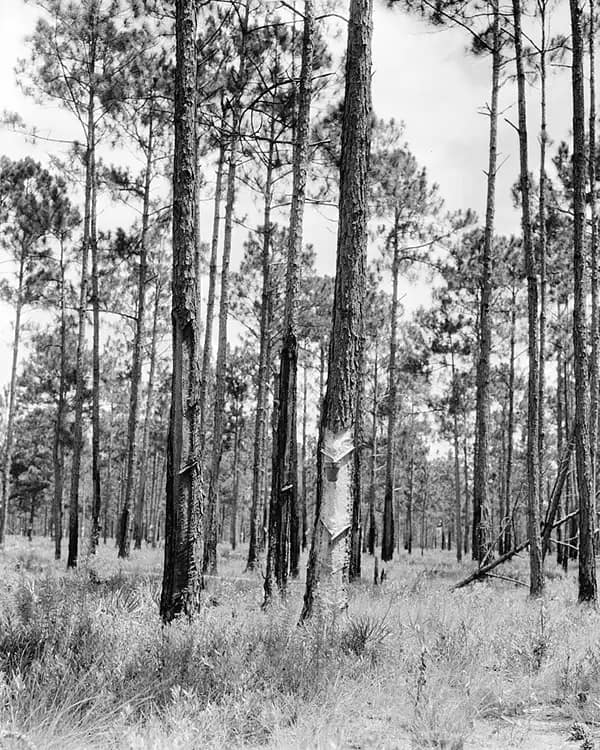
Turpentine trees, Florida, 1936 by Dorothea Lange
Except for a dash here and there, solvents were generally not necessary because paints made by hand are thinner than contemporary artists’ paints. Artists and artisans needed more solvent when making monumental art works. The real demand for turpentine came from the new commercial painting and coating industry in the late 18thC. The British in particular decided to build with inexpensive wood from the colonies rather than build a more expensive brick house. But they wanted their houses to look like brick so they wanted iron red paint for exterior walls and white paint to finish interior walls.
The paintings and coatings industry relied on inexpensive turpentine solvent which was produced by enslaved Africans in the American South because the solvent significantly reduced the clean up time for industrial operations by quickly defatting oil and grease on machines.

Enslaved people working in the American South

Turpentine Cup Gutter System, 1936 by Dorothea Lange
Oil of turpentine is harvested more like maple syrup but moving very slowly from cuts in pine trees’ bark. The resin is distilled and the volatile components of the resin are collected. The best quality then and now is double or triple distilled turpentine which is water clear. (“Cheap turps” contains approx 20% resin debris that will slow down dry time and compromised the quality of paints films.)
Until the advent of mineral spirits, turpentine was the common solvent used in painters’ studios to make paints more fluid; to make spirit varnishes and for clean up. Turpentine is toxic. Its aromatic fumes have a dangerously low flash point (100 degrees F.) and a dangerously low permissible exposure level (PEL).
Pouring oil paints thinned out with turpentine is a dangerously toxic studio practice.
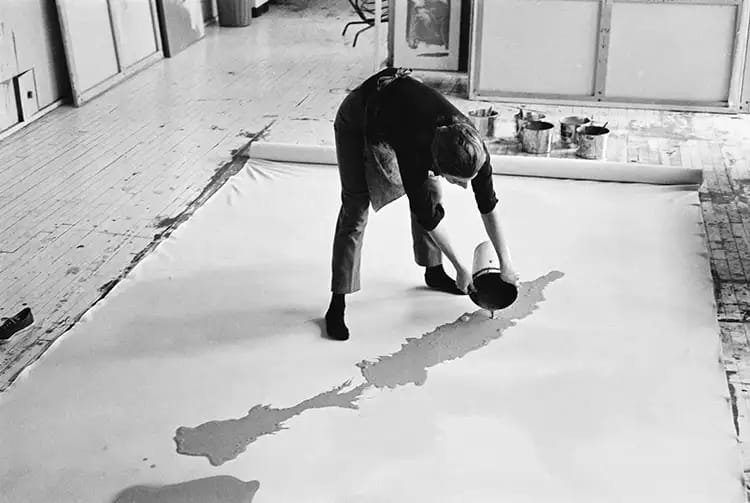
Helen Frankenthaler painting in her studio
Since WWII solvents made from petroleum distillates, a group of solvents distilled from crude oil, replaced turpentine in industrial work places but not so much in studios. Mineral spirits (MS) solvent is not absorbed into healthy unbroken skin. MS does have a high aromatic component which is a respiratory hazard. Since the 1970s increasingly better qualities of odorless mineral spirits (OMS) have been produced.
Ironically – now that oil painters have access to an even safer OMS solvent, they are worried because they CAN’T smell it! You cannot smell the aromatic fumes because they have been refined out of the solvent to reduce exposure. The aliphatic components of the solvent evaporate much slower painters can work around the solvent longer.
Managing solvents involves fresh air. Regardless of the media you choose, change the air in your studio before you begin a painting session. Think hard about your health before you choose to paint in oil colors or acrylic paints if you do not have decent ventilation. Check with paint manufacturers about solvents and chemicals contained in acrylic paint formulations before you buy expensive paints thinking they are “safer.”
Best solvent choices for oil painters
Odorless mineral spirits (OMS) is petroleum distillates, a group of hydrocarbon-based chemicals that are refined from crude oil. Use with alkyd resin painting medium instead of natural resin mediums.
OMSis strong enough to defat oil paints; thin alkyd resin painting mediums and for brush and studio clean up. OMS is barely strong enough to dissolve damar resin – partially.
The resulting solution will be cloudy.
No odor. Aromatic components removed.
Permissible exposure level (PEL) 300 (Higher PEL = safer). At PEL levels above 300, the solvent does not have enough strength to defat linseed oil. Keep containers closed.
Flashpoint approx. 145 degrees F. (Higher flashpoint = safer)
Kb Value 28 – solvent power LOW (compare to turpentine Kb 56)
Mineral spirits (MS) – do not use. Aromatic components can become too highly concentrated in studio air too quickly. Immediate respiratory irritant.
D-Limonene is another natural solvent like turpentine but distilled from citrus fruit. Same toxicity as turpentine. Nice lemony smell is caused by aromatic components which are respiratory irritants.
Alcohol – A few drops of alcohol helps disperse pigments when making egg tempera paint. If you want to use alcohol as a component in a painting system, use with the more compatible egg tempera and acrylic paints. High aromatic component. Irritant. Dangerously low flashpoint.
Turpentine – low PEL 100. Low Flashpoint approx. 100 degrees F. Easily absorbed into healthy, unbroken skin. High aromatic component. TOXIC.
Header image: Turpentine worker, Georgia, photograph by Dorothea Lange